Did you know that sweeteners are used in more than 6,000 different food products worldwide? A sweetener is a food ingredient created to give food a pleasant taste while containing no calories.
The labels on the products we use every day carry a great deal of information, yet most people never notice it. So we have prepared a guide on how to read label information correctly, using the redesigned Sprite label as an example.
As the pace of life changes, we all need to keep better track of the sugar and calories we take in through our food and to manage our consumption more intelligently. That makes it important to get information from reliable sources and to calculate your own intake. We have therefore put together guidance on how to work out a sensible level of sugar consumption and where to find the information. The first place to look […]
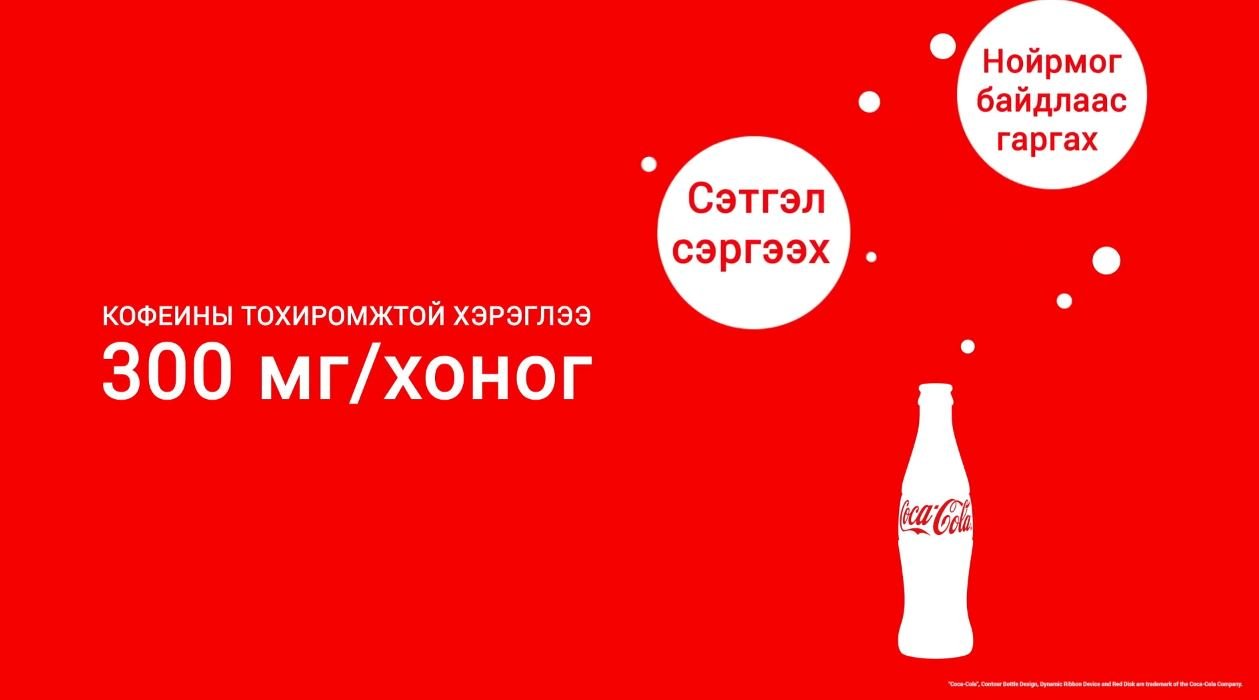
People consume caffeine every day through a wide variety of products. And of course, caffeine is one of the ingredients that gives Coca-Cola its unique, remarkable taste. Now let us look at sensible caffeine consumption. Guidance from the U.S. food authorities sets a reasonable daily intake of caffeine at 400 mg.
To make it easier for you to keep track of the calories you take from our products, we have brought many of them to market in smaller packs. And we are confident that we are making products that meet your needs. Smaller packs are light to carry and make it easy to keep count of your calories.
Did you know that sugar substitutes are used in more than 6,000 different food products worldwide? A sugar substitute is a food ingredient created to give food a pleasant taste; it is sweeter than ordinary sugar yet contains no calories. Now let us look at aspartame, one of the most widely used sugar substitutes.
It has been 130 years since Coca-Cola first reached consumers — a brand that, since 1886, has been there with its remarkable taste for every happy moment we share. In 1886 Coca-Cola sold nine servings a day at a single outlet; today it sells 1.9 billion servings a day across 27 million outlets.
The polar bear first appeared as the central character in the television commercial “Northern Lights,” made as part of The Coca-Cola Company’s global “Always Coca-Cola” campaign of 1993.
Commissioned by The Coca-Cola Company, the artist Haddon Sundblom painted Santa Claus for the company’s Christmas advertising as a rotund old man in a red suit with a full white beard — the image that became the modern depiction of Santa Claus.
In 1982 The Coca-Cola Company launched its first calorie-free, sweetener-based drink; Coca-Cola Zero, introduced in 2005, joined the ranks of billion-dollar brands within two years, by 2007. Coca-Cola Zero gives you the wonderful lift of genuine Coca-Cola taste, with the added distinction of containing no sugar ...
Commissioned by The Coca-Cola Company, the artist Haddon Sundblom painted Santa Claus for its Christmas advertising as a rotund old man in a red suit with a full white beard — the image that became the modern depiction of Santa Claus.
In 1982 The Coca-Cola Company launched its first calorie-free, sweetener-based drink; Coca-Cola Zero, introduced in 2005, joined the ranks of billion-dollar brands within two years, by 2007.
In 2008 The Coca-Cola Company won the first-ever Grand Prix in the Design category at the Cannes Lions festival, for its redesigned aluminum can and its distinctive design solution.
In 2004 MCS Coca-Cola LLC commissioned its PET bottling line, putting the 500 ml, 1.25 L and 2 L bottles into consumers’ hands.
From 1969 The Coca-Cola Company placed its logo — Coca-Cola in white on a red background — across all of its distribution channels, making the brand known to ever more people.
In 1899 two young entrepreneurs, Benjamin F. Thomas and Joseph B. Whitehead, bought the rights to bottle and sell the drink in glass from Asa Candler for just one U.S. dollar. It was the deal of the century.
Carbon dioxide is produced by the body’s metabolism, and green plants absorb it during photosynthesis, releasing oxygen in its place.
More than 700,000 people work for The Coca-Cola Company in over 200 countries worldwide. It also helps create 7 million jobs indirectly, making it one of the world’s ten largest employers.
On 17 September 2001 MCS Coca-Cola LLC became an official member of the Coca-Cola family, and a global brand was produced in Mongolia for the first time.
To set Coca-Cola apart from everything else, the company’s owner Asa Candler distributed it in red barrels — a wholly new marketing idea at the time.
In 1923, at a time when households were getting their first refrigerators, The Coca-Cola Company introduced a six-pack that could be carried home in one go — making it possible for consumers to enjoy a cold drink at home.
About 90% of a sparkling drink is purified water, so it can be one of the choices that fully meet your body’s fluid needs.
In 1960 the Coca-Cola we love to drink was packaged in a can for the first time. For the company it was the first change to its packaging since the glass bottle we know today was designed 45 years earlier.
In its first year on sale, Coca-Cola sold an average of just nine servings a day.
In 1886 Dr. John Pemberton created the Coca-Cola formula and began selling it through soda fountains. At the time Coca-Cola was a thick syrup, diluted with carbonated water, and everyone who tasted this sparkling drink — “delicious and refreshing” — is said to have rated it highly.
In 1993 the 500 ml plastic bottle in the shape we know today went on sale. By taking the same form as the glass bottle introduced in 1915, it helped set Coca-Cola apart from other similar products.
The Coca-Cola Company’s remarkable growth and its lead over competitors are inseparable from that perfectly shaped glass bottle with the name embossed on it. The distinctive bottle was granted intellectual property protection in the United States in 1915, and it has kept its essential form for 100 years.
After “OK” — the word understood in every language on earth — Coca-Cola is the second most widely recognized mark in the world.
In 1887 Dr. John Pemberton, the creator of Coca-Cola, was the first to hand out coupons for a FREE TASTE of the drink in order to sell it — the company’s first marketing program for “introducing a new product to the market.”
The partnership between the International Olympic Committee and The Coca-Cola Company began in 1928. Coca-Cola went on sale at numerous small outlets around Amsterdam during that year’s Summer Olympic Games, and in the 87 years since it has been an uninterrupted official partner of 19 Summer Olympic Games.
In 1886 Frank Robinson, bookkeeper to Coca-Cola’s creator John Pemberton, not only came up with the name Coca-Cola but also created its remarkable script by hand.